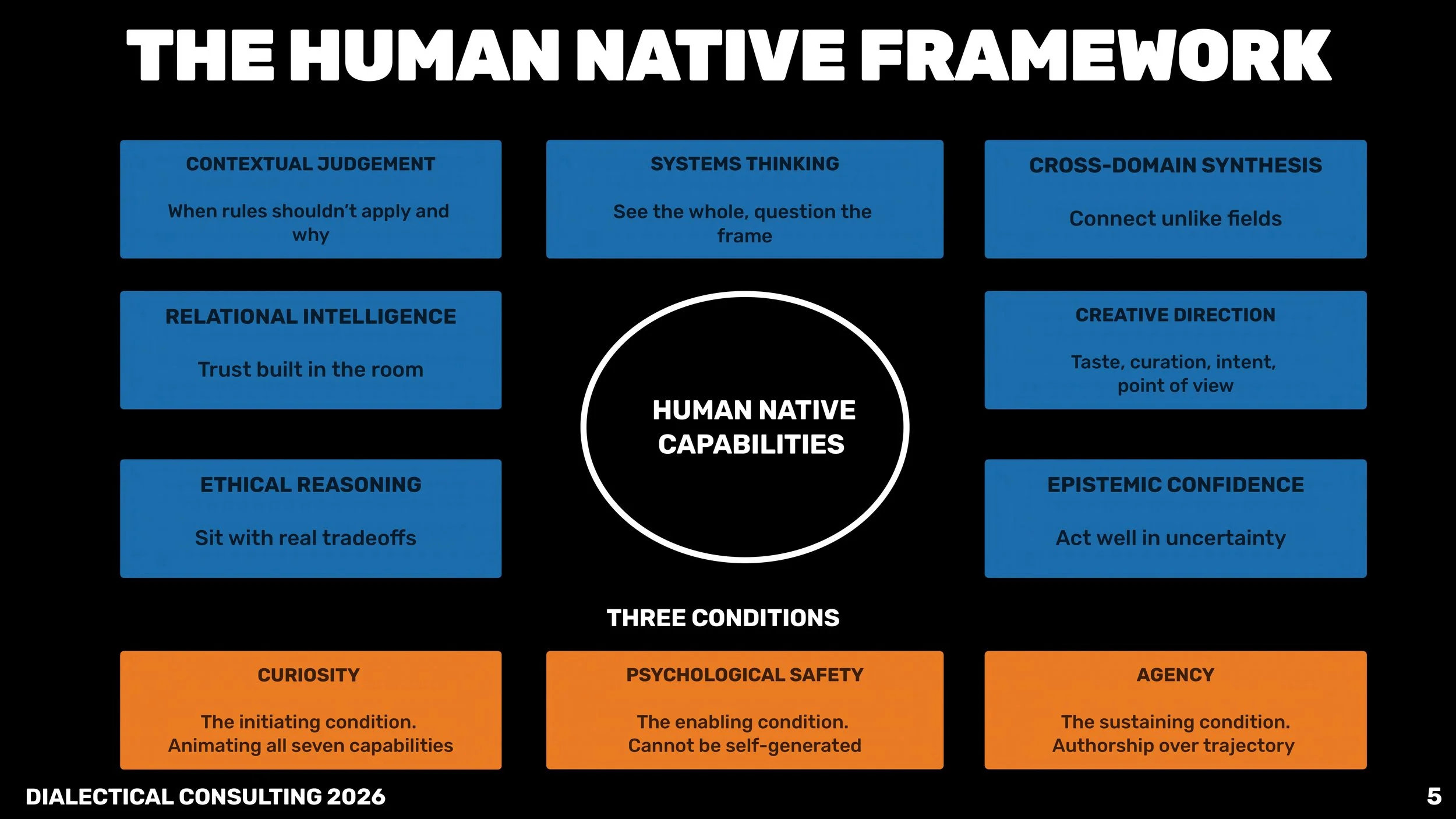
The Human native framework
Human Value in an age of AI
When I was a social work student working in the homelessness NFP sector, I accidentally found a data error that meant some of our clients weren't receiving funding they were eligible for. I spotted a pattern that didn't make sense. I presented this to the managers, and with their support, this was reported back to the department.
A human noticed what the system missed.
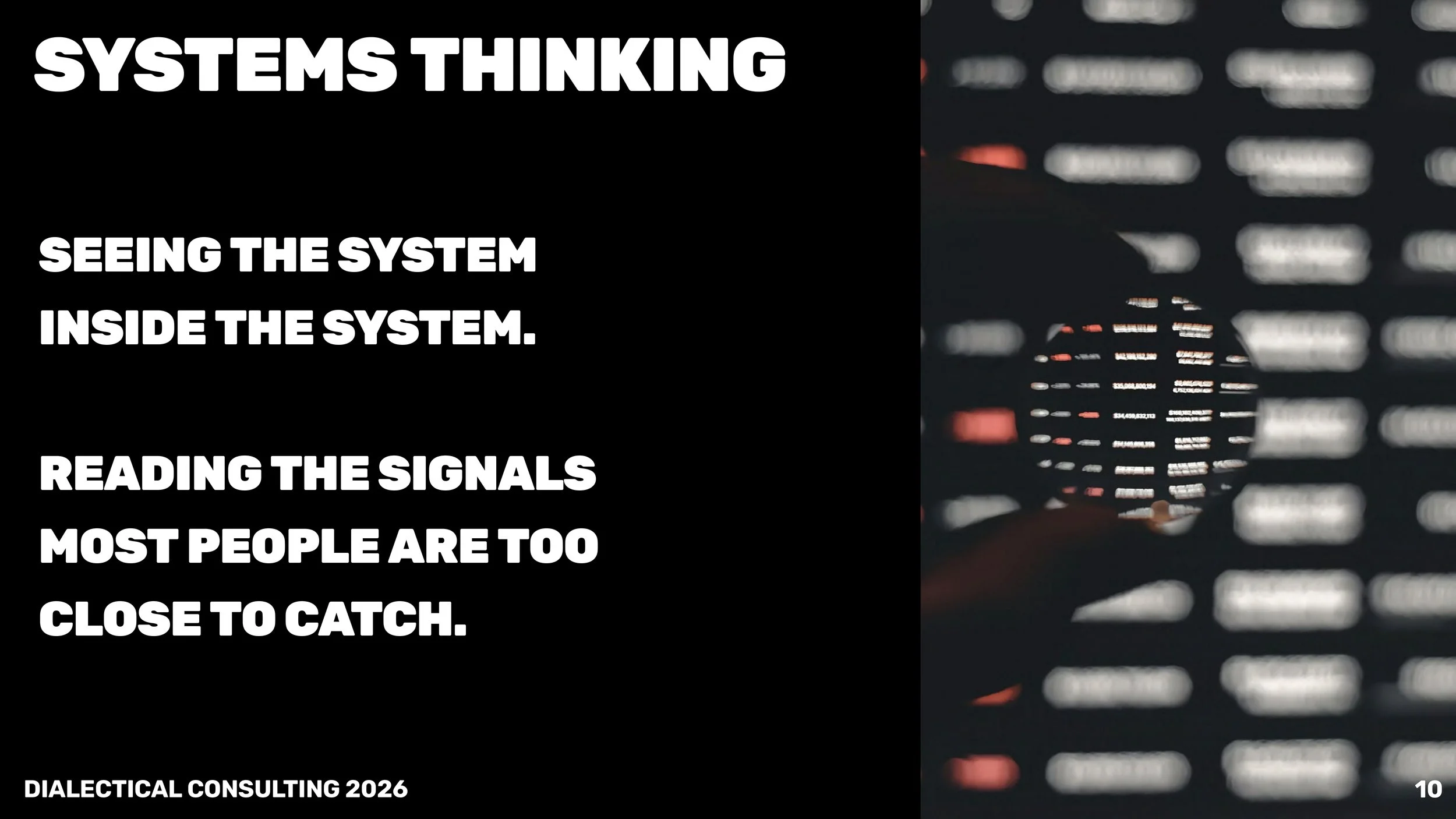
It wasn't my first experience of understanding how systems shape human outcomes. But it was my first experience of understanding how data does. And why the intersection between the two matters so much.
Then there are waiting rooms. We've all been in them. The low-grade anxiety of dead time. The paper forms you've filled out six times before. The colour someone chose that makes everything feel worse. These aren't small things. They're design decisions that shape how people experience the help they came for.
Architecture, urban design, clinical practice, data systems, technology transformation. I've been collecting moments across all of them. Sitting with them. Testing them. And the same truth keeps surfacing.
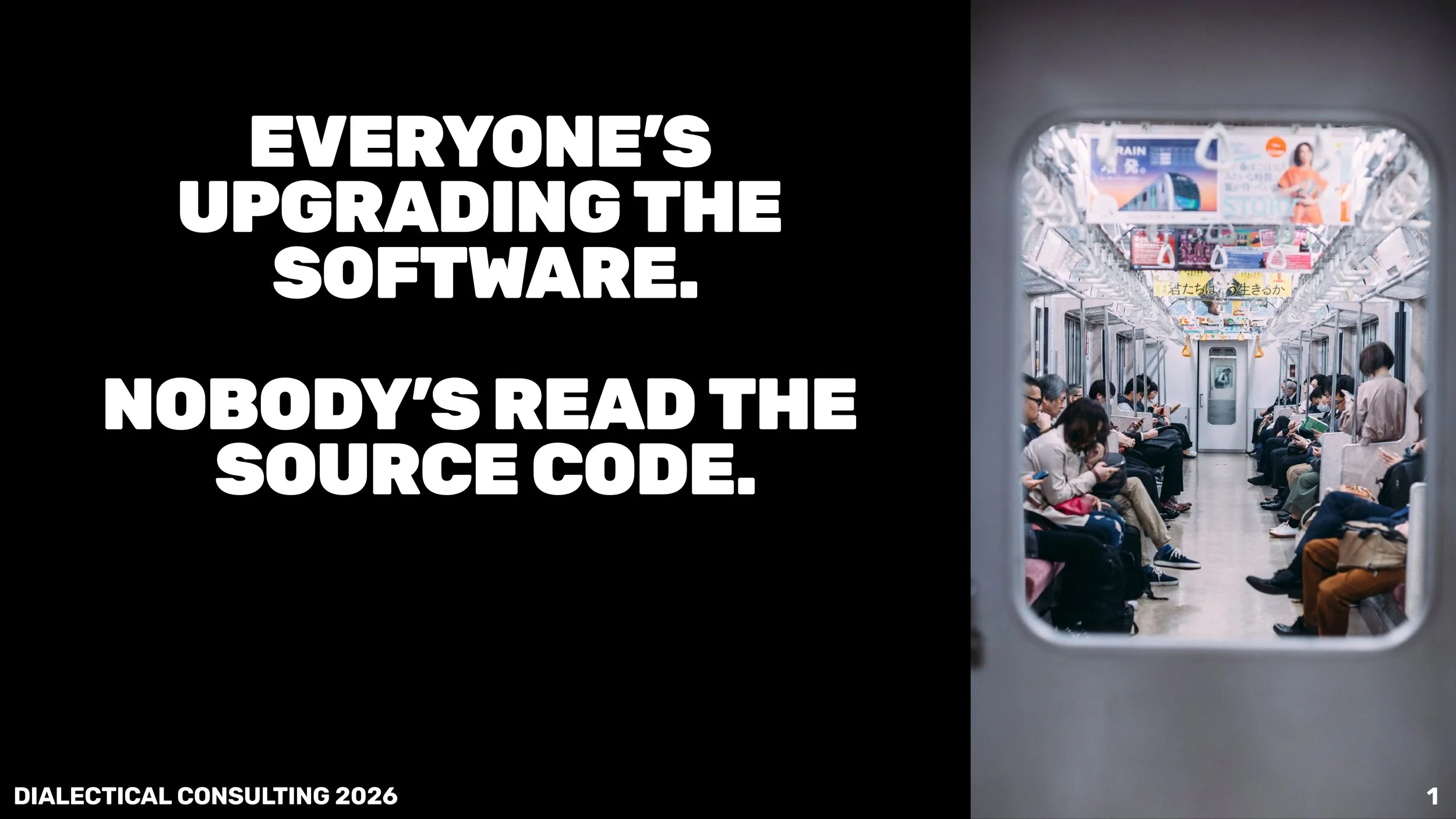
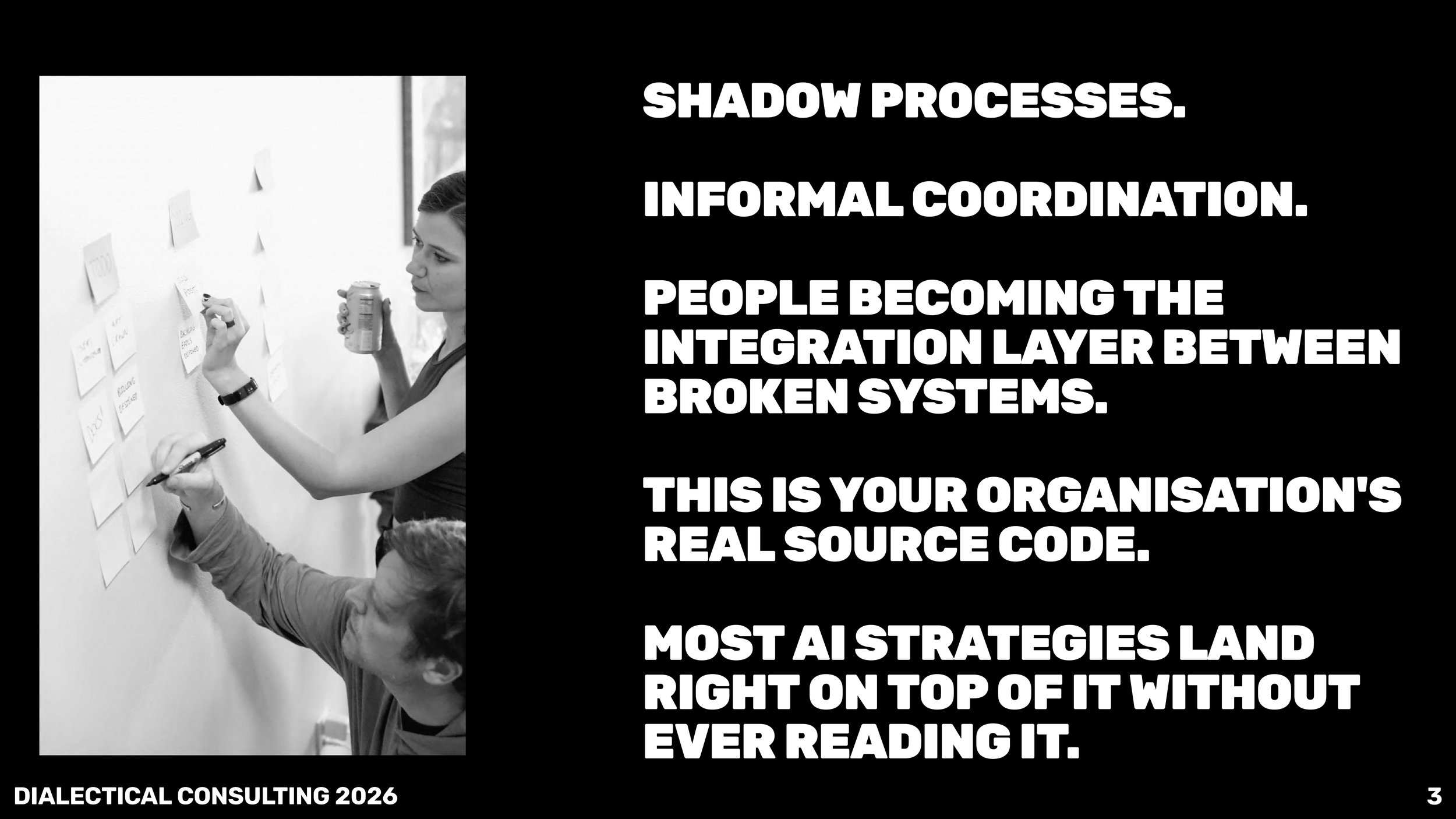
Systems shape how humans experience the outcomes we're trying to deliver. Design determines whether that's for better or worse. And technology, whether AI, data, or digital, amplifies whichever one you've already built.
This is the throughline of my practice since founding Dialectical Consulting. It's why I named it what I named it. Dialectical thinking is about holding two things in tension simultaneously. Human and AI is exactly that tension.
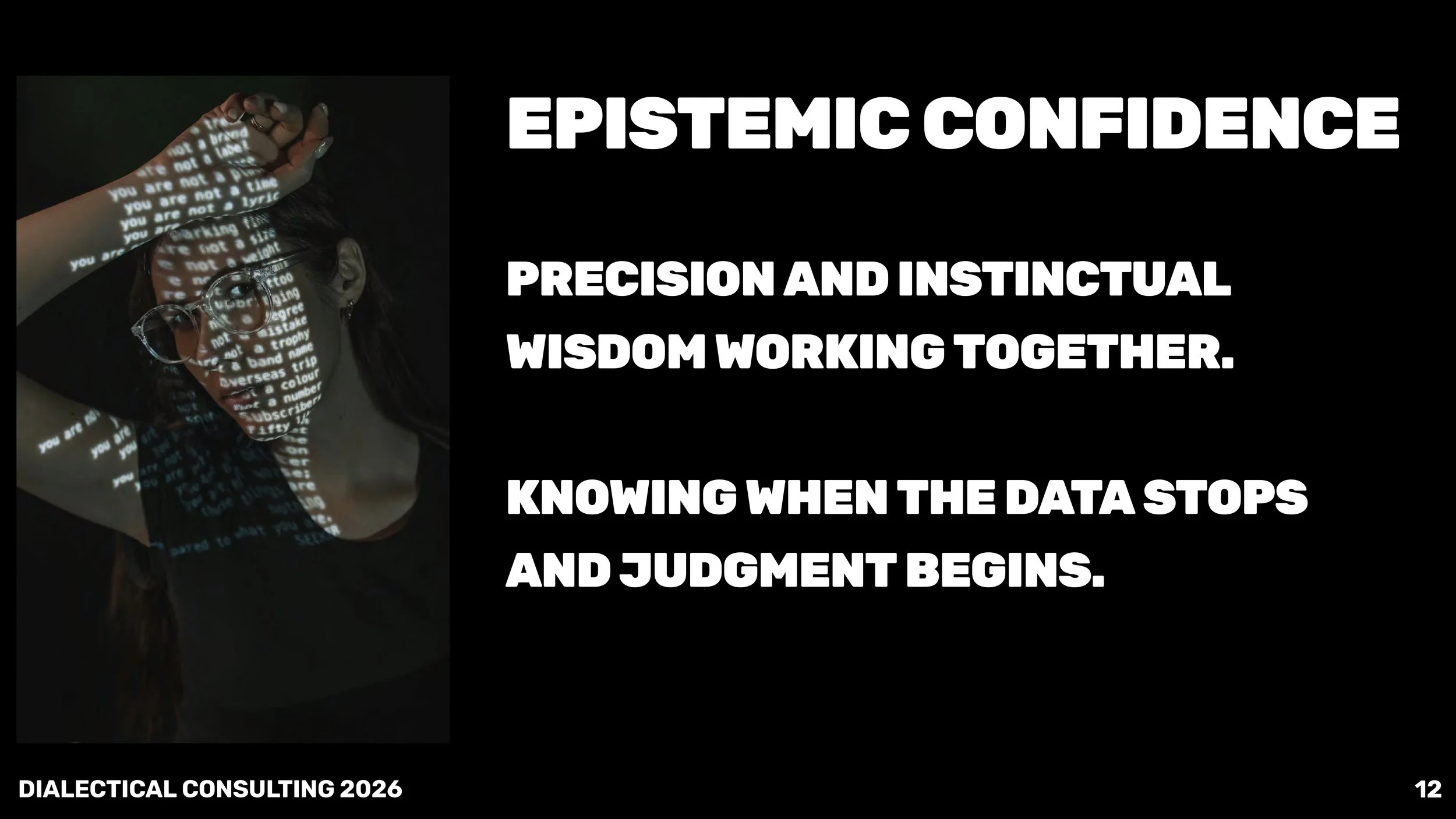
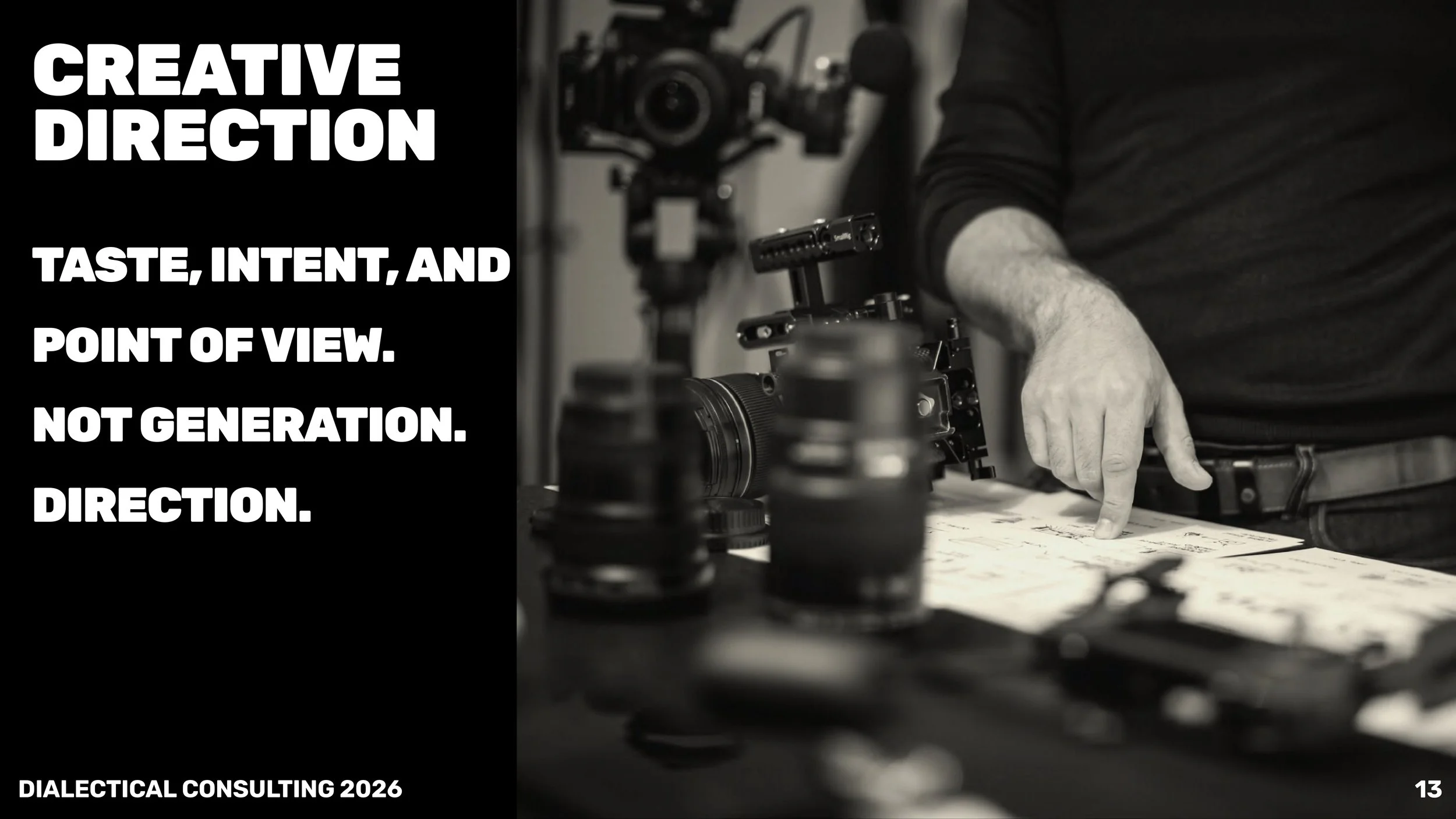
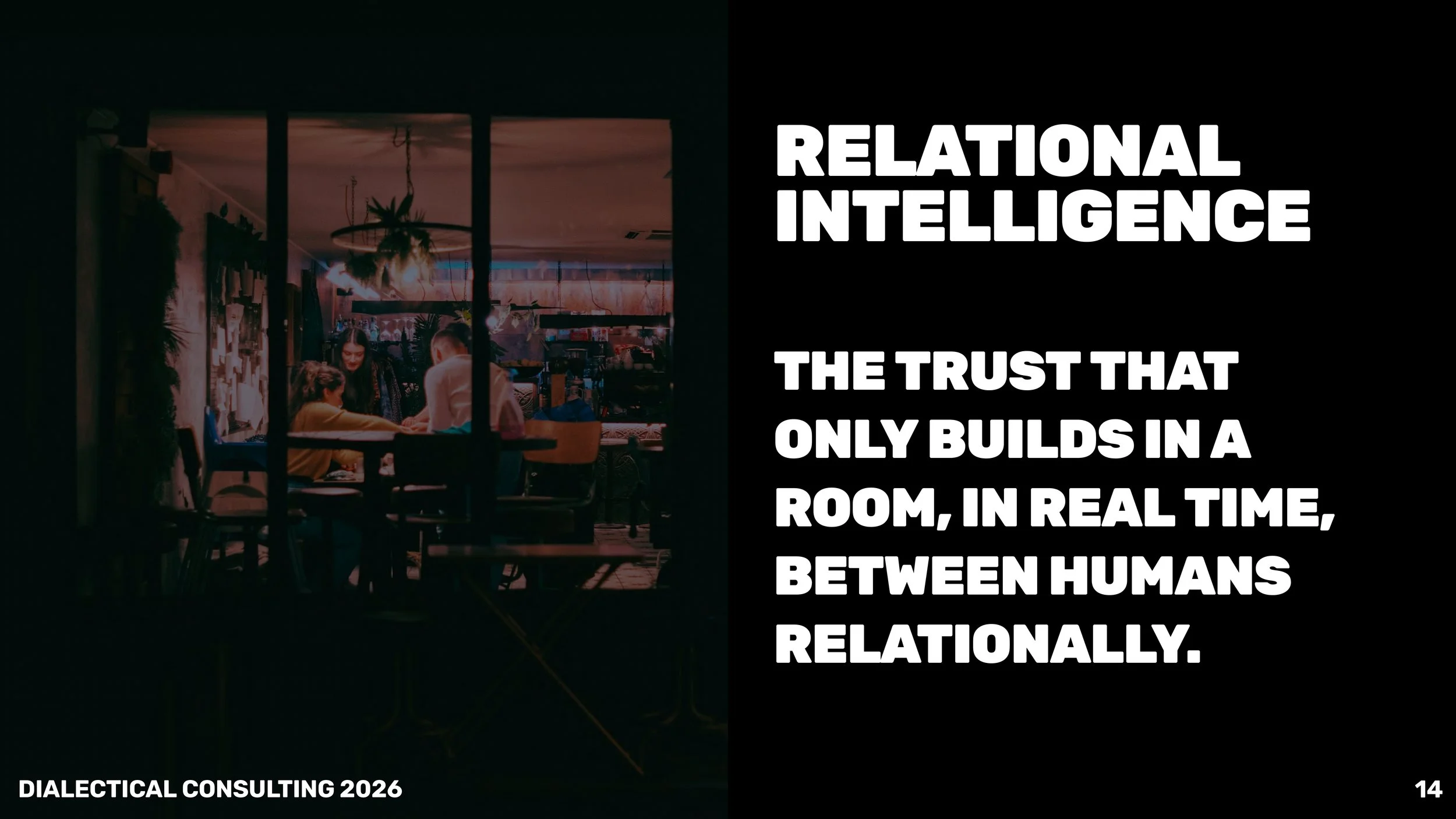
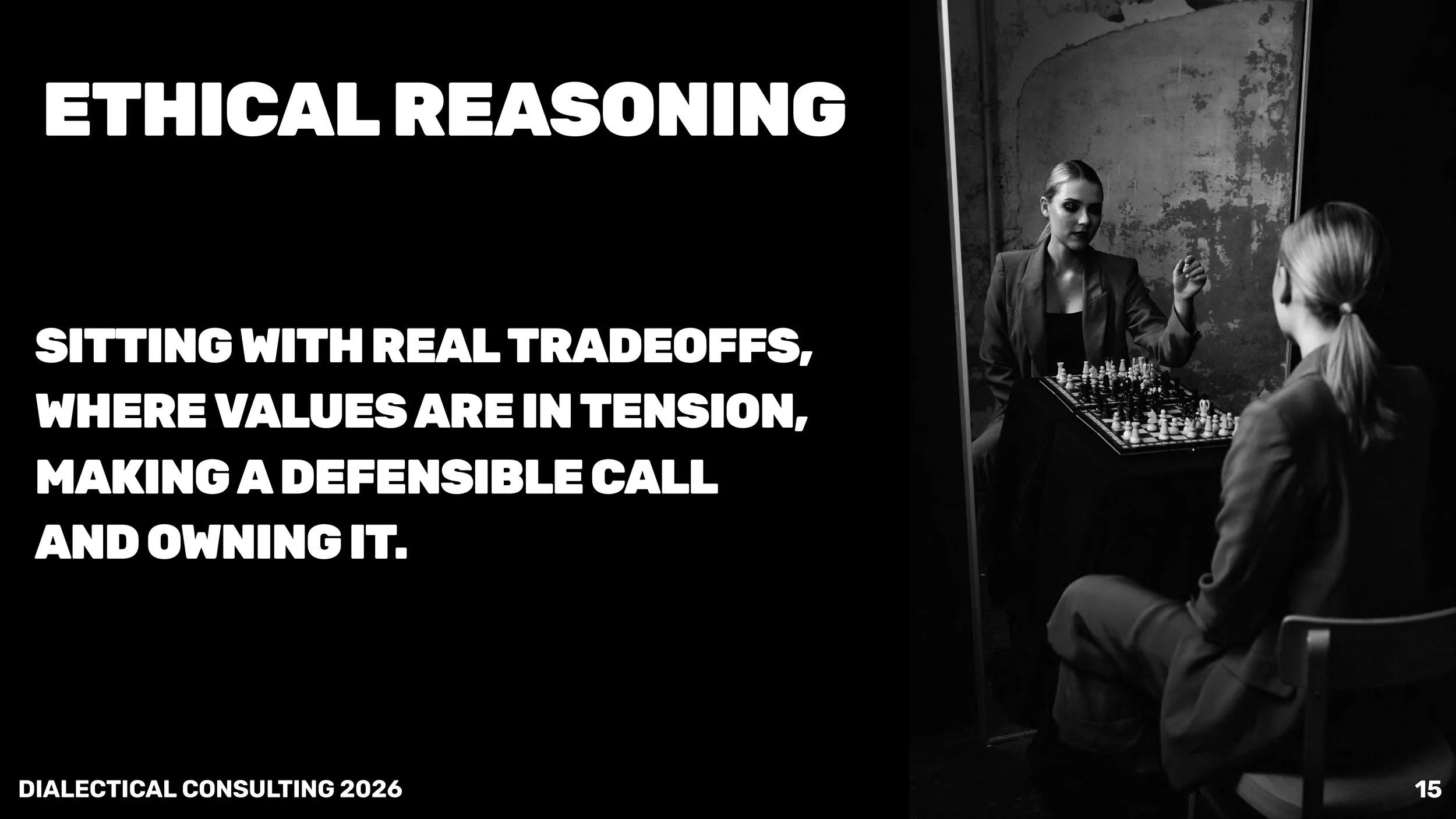
The question I keep coming back to in every transformation conversation right now isn't just how do we design better systems alongside AI. It's what do humans actually bring that AI can't replicate. And are we designing for where those things get to exist at all.
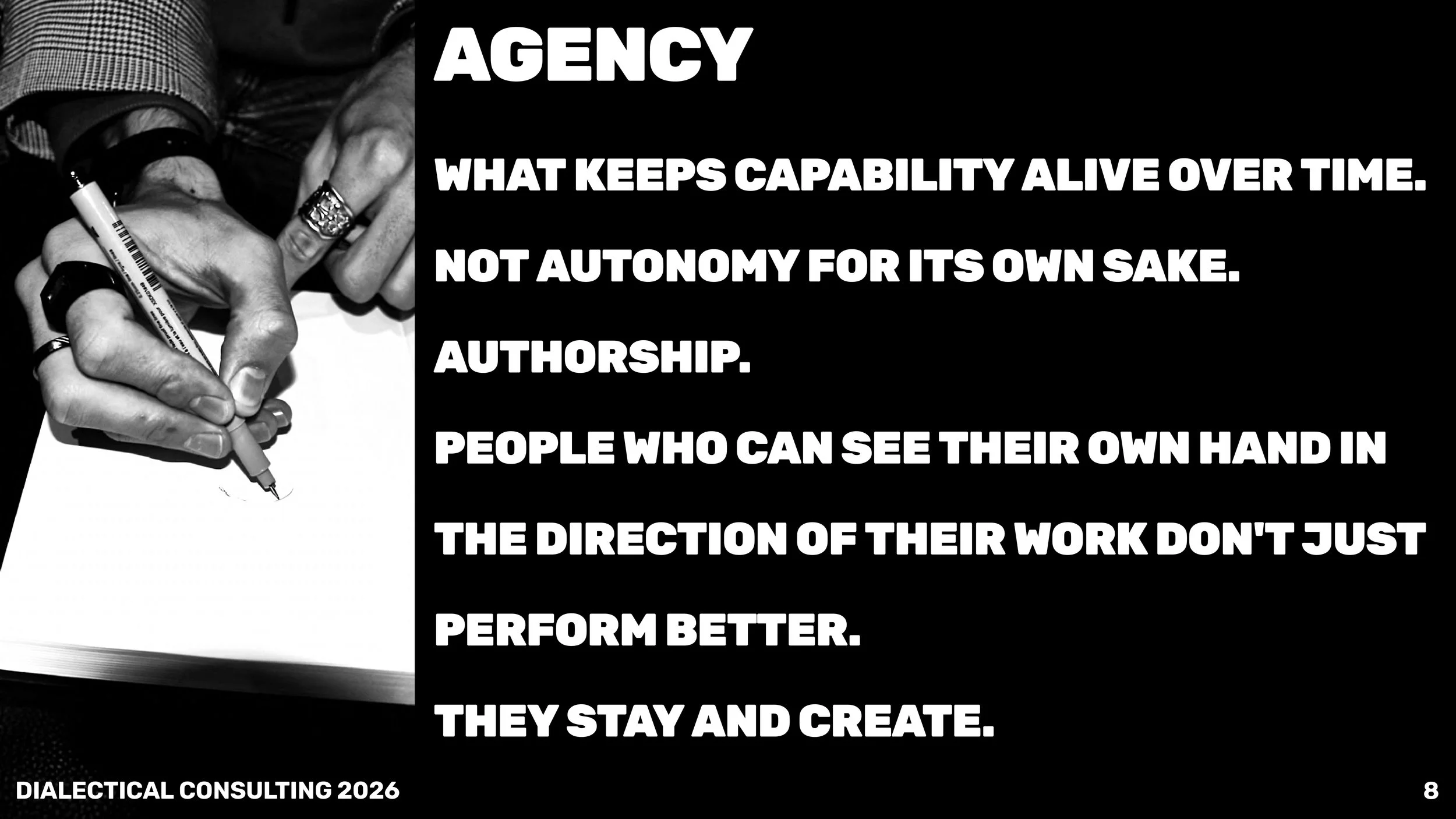
These aren't soft skills sitting alongside the real work. They're the capabilities that will determine whether your people thrive or disappear inside the systems you're building.
Not a methodology. A lens. The same one I've been looking through since that first accidental data finding in a homelessness service. It just has a name now.
Much like dialectics itself, the answer isn't technology or humans. It's the tension between them, designed well.
The Human Native Framework